

Freedom Fridays
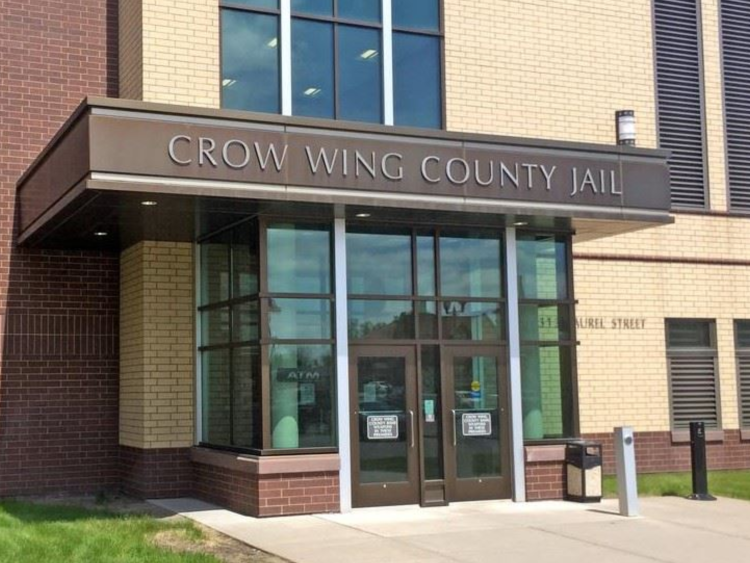
Friday is “go to jail” day. First class at 9:00 and second at 10:00. Mary and I meet in the jail entry, hang our coats together in a locker, sign in and check our teacher bags.
Last week, we did vocabulary worksheets, short stories, comprehension and pronunciation. Each week, we’re trying to offer a variety of English activities. We looked at what the other brought for this day, roughly decided on our choices and stepped over to the sergeant to be wanded for metals before stepping inside the jail.
We followed the narrow hall to Delta, where we entered the classroom. Didn’t seem like many folks were around. We went in and set up pencils, notebooks and files. The buzzer sounded and, there they were, Alberto, José H., Lucio, Yasmani. . . but. . . no David?
“He is out!” Alberto announced, a smile breaking across his face. “He is out!” he repeated.
My mouth dropped open. My hand went to my chin to hold it from falling any further. I turned around. “Mary! David is out! He is gone! He is with his family right now!”
Joy literally washed over the room. Yasmani’s white teeth flashed. Lucio, who rarely reacts, smiled exposing deep dimples. A new, so far unidentified young man, looked up, eyes sparkling hopefully. They all scooted around the table, their chairs scraping across the floor, as they tucked their knees under and leaned in to catch the news.
In the hubbub to follow, I managed to grasp that David had a visit with his lawyer, the one we had arranged, and finished his paperwork. They all want a habeas corpus. That freed them, if they qualified. Then, they might get the ‘habe’ but still need some money. To have it filed started around $2,500 coming to a minimum of $5,000 with lawyers to present them. There would likely be a bond. A court date. If ICE couldn’t prove rightful cause to have arrested within 72 hours, they didn’t have a case. In theory, the arrest would be thrown out. David, however, had been held for six months.
Of the 4,000 that ICE brags of having rounded up and incarcerated in Minnesota, only approximately 300 were actually arrested with a cause. I’m not good at keeping numbers straight, but point being, very few of those tackled, drug along the ground, hand-cuffed and hauled off in shackles fit the label of “the worst of the worst,” a term used by the Administration.
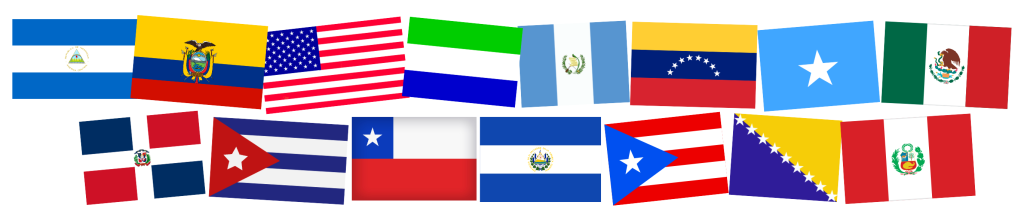
I scanned the faces of those around this table. They represented Nicaragua, Cuba, Honduras, Ecuador, Guatemala, Chile. Others before them were Venezuelan, Mexican plus the non-Spanish-speakers from Somalia, Laos, and Sierra Leon. What a kaleidoscope of colors and cultures. What a beautiful gathering of human hopes now locked away from the sun.
“I’m going to miss David,” I told them, “But, I am so happy he is out! There will be more steps before this over. You all have such important stories to tell. Maybe write and process for yourselves. Maybe for your children. Maybe for the future, when this period in history will need the truth of your experiences.”
Yasmani tilted his head to one side, scanned the gathering of men and thoughtfully added, “We from many countries. We meet here. We help each other. We share. Juanita right. We here for different reasons. Now we work together. That is good.”
What a profound example of a teachable moment. The teacher in me looked for a link to bridge this philosophical truth to our class activities on homonyms. I took the opportunity to hand out Composition notebooks, gifted by Lilja, to those who didn’t have one. Paper is a precious commodity. I handed out a few extra sheets of drawing paper to Alberto, whose first book was filled with vocabulary lists and drawings.
“If you wish, you can use these for letters, journaling or, like Alberto, artwork,” I suggested.
“Of course, you can also take class notes!” I said with a wink. Mary handed out the day’s worksheet while they wrote their names into their books. Alberto, having been here for months, knew the ropes (another phrase to translate) and advised me I needed to have these stamped so the men could keep them. I gathered them back up and went to the office while Mary introduced: to/two/too, flour/flower and the list of baffling English vocabulary.
When I returned, they were into a deep discussion regarding their use of accents, tildes, and words that begin with “h” – a silent letter in Spanish. Oh my! What an uproar over the need or not, to write accents; is it that important to write “hambre” with an “h” or leave an accent off the word, “hablo” which changes from “I speak” to “he spoke” depending on the written accent mark. Their voices rose and fell as arms flailed in wild gesturing. What must the guard at the bank of televisions be thinking? This wasn’t a riot. This was Spanish-speaking in its purest form!
“Did you know?” José H. looked at me, “That when Alberto and I talk to each other, everyone thinks that we are arguing!” He pointed his chin at Alberto, who nodded in agreement.
Sadly now, anyone speaking Spanish can be kidnapped from their cars, on their way to work and even when inside their houses. Yet here, we laughed when mimicking each other’s accents, when different words were used from different countries, when discussing Valentines’ Day, known in their countries as Friendship Day and if they bought flowers, one of our vocabulary words! When asked how much I spent on Valentine gifts, I tapped my left elbow with my right hand and they snickered. Tapping one’s codo is the gesture for being tacaño or cheap. No words required.
“Escuchen, por favor!” I called out, returning my thoughts to the esteemed ongoing grammar debate. “Here are some of the words we used today,” I said, writing a list on the white board. I remind myself that, at the end of the day, some English might be learned, but getting out of lockdown for two hours of camaraderie is the real deal. These gentlemen were my students and my teachers.
Well, well, haven’t I gotten possessive? My students. I tell them I wish I were a fairy godmother. I’d wave my magic wand and we’d all be at my house. We’d have a fogata, a bonfire, out in the forest. I’d ask my friend who owns a chocolate shop, to bring samples.
“I’m a chef,” José chimed in. “I’m really good! I’ll bring the food.” Yasmani said he’d make something Cuban. Alberto said they all had each other’s addresses. We’d have a reunion.
One day, yes, one day, they will all meet at my house and celebrate their freedom.
It’s heartening to read of this work, including successful referral to Counsel!
For me it has been an honor and privilege to work with these families. I just hope to be put out of a job!
Beautiful. So meaningful. Thank you, Jan!
Thanks, Nan. . .from contemplating Mom’s 100th b-day anniversary, the Hmong. . . and now this. . . quite a ride.
Its good to have your presence, as Eau Claire is part of our foundation. Appreciate our long term friendship!
I am moved to tears and gratitude for the work you are doing and the presence you are sharing at the jail.
Thanks so much for this blog.
Amiga mia, So many stories. I am grateful for your support! Your presence helps in the balance of all the incoming craziness! And always, thanks for reaching out.
Shine on, Jan. My heart is with you all.
Pam, this work and all we go through is softened when done with like-minded people. Thanks for being one of them!
This one is particularly joyful and tender Jan, as you share with us-and them- the humanity that is always available if we pause and allow it to come forth. Your writing is enriching and your work unifying/ thank you.
Stefani, I’m particularly pleased at your comment about the humanity. After my initial visits, these people went from being only names and countries, to stories and relationship. Never knowing if I would see them again really puts one in the moment. Focus. Concentration on their faces, vignettes and yes, tears. I keep Kleenex but am not allowed to send any packets back to lockdown with them. It is bittersweet. I want to remember the joy in our sharing. Gracias, amiga mia.